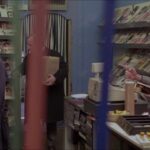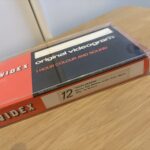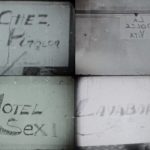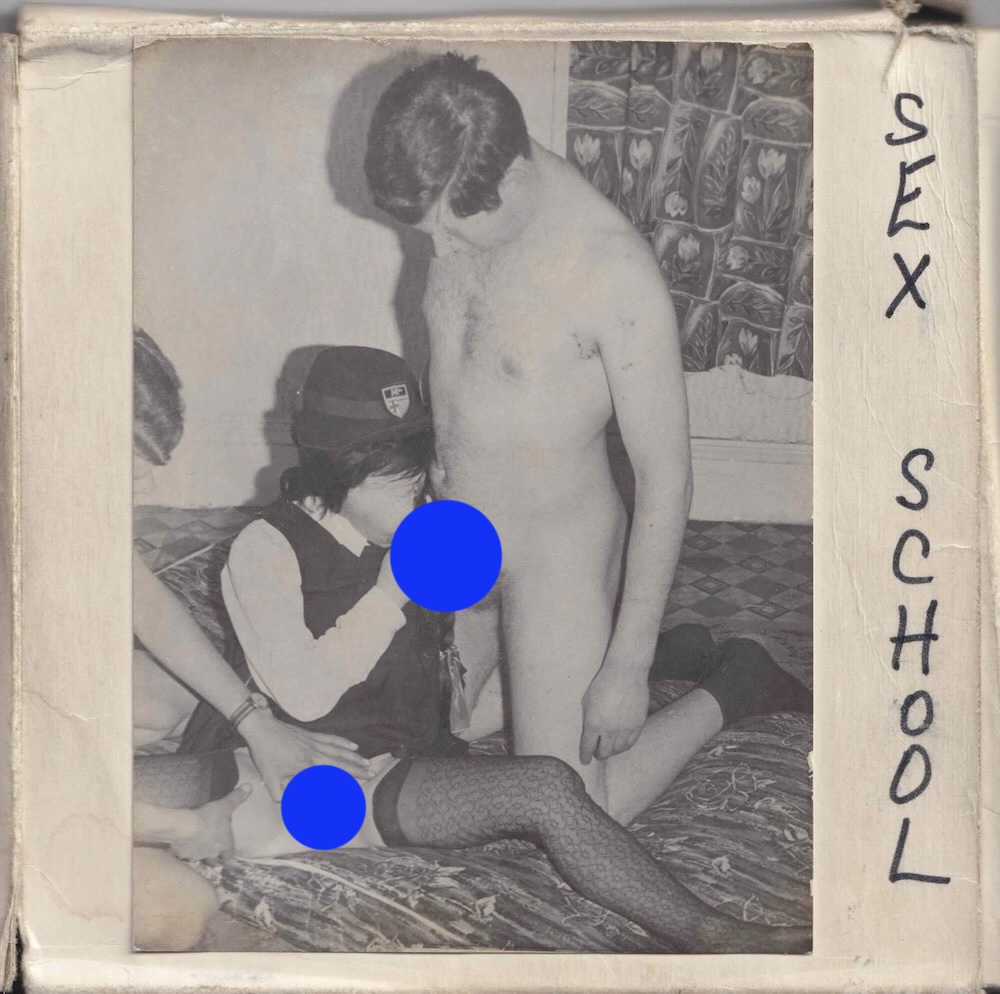
Recently, a generous poster on the VintageErotica forums uploaded two roller scans from their private collection. While one had no title, likely due to a missing title card, the other was named Sexuality. This rang a bell, and after consulting the labelography in Under the Counter I realised that it was an early unbranded title mentioned in a 1966 Kensington Post article. After viewing the scans, it was obvious that both films were made by the same hand, as they featured the same performers. By pure coincidence, only a few weeks later, I received a shoe box of rollers from a collector who asked me to assess their recent purchases. Within this box was an unbranded roller with the typical Soho Postcard glued to the front and the handwritten text Sex School on the side—another title named in the Kensington Post article.
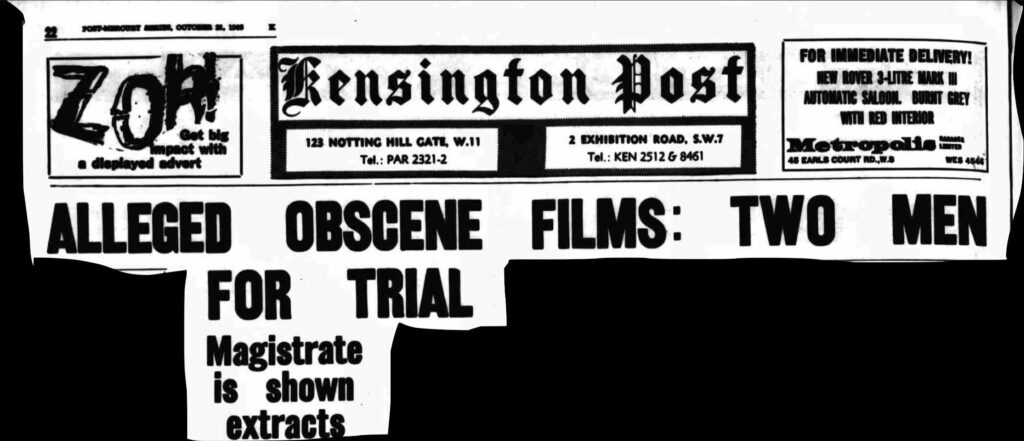
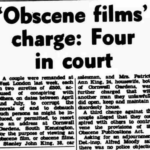
The Kensington Post account from 21 October was one of several newspaper articles that detail the committal for trial of two men, Cornelius Sullivan and Martin Harris, at West London Magistrates’ Court. I had initially omitted this case from Under the Counter because no known prints of the five named films—Up the Junction, Sexuality, Sex School, Lonely but Happy, and Private Nursing Home—had surfaced during my research. With these discoveries, it is now possible to give further insight into this illicit production cell.
The case began on July 23, 1966, when Metropolitan Police officers intercepted Cornelius Sullivan outside a property on Greyhound Road, Fulham, carrying a blue holdall containing 42 copies of a single 8mm film titled Up the Junction. In court, the prosecution argued that this address served as a centralised production and distribution hub overseen by an uncaptured “prime mover” named Hugh McIntyre. By naming McIntyre as the central coordinator of the operation, the case establishes him as a key figure in the first generation of British roller makers, operating a sophisticated independent lab alongside contemporary pioneers like Ivor Cook, Ken “Skinny” Taylor, Leonard Thorpe, and Martin Granby.
While Martin Harris, a meatporter residing at the property, assisted in the basement print lab, Sullivan’s role in this ecosystem appears to be that of a runner or salesman. His initial defence that he was “only carrying them for someone,” combined with his rapid change of story to claim he was going to sell them himself, suggests a low-level operator caught in the middle, tasked with transporting stock directly to the Soho bookshops that would have served as the primary retail outlets for these films.
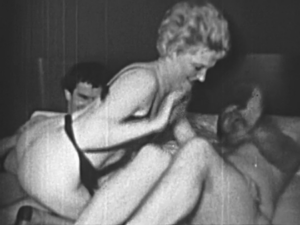
This network represents a distinct pocket of independent, unbranded production. Branding as a marketing or tracking tool had not yet emerged in the roller market; Evan “Big Jeff” Phillips’ Climax Films is said to have been the first label to brand in the latter half of 1966. Unlike the more structured, edited films that were made during the unbranded period, the surviving scans look more like raw, observational documents made among a familiar circle of people who knew each other well. Bypassing the lab licensing system required a sophisticated understanding of chemical development and optical printing to handle the negative films found in the basement. Furthermore, the utilisation of a recurring cast and standardised title cards across these titles reveals an established, stable network of performers and a uniform production process operating under conditions of secrecy, maintaining mutual trust despite the legal risks of a conspiracy charge. The operation provides further proof that anyone with basic technical know-how, perhaps guided by instructions in amateur photography magazines or hobbyist books, could turn their hand to profitable roller making.
This structural continuity allowed the network to maintain a brief, small production line. The Kensington Post account provides rare, empirical data regarding the exact scale and economics of this pre-branding era. The mention of 42 copies seized from Sullivan, combined with the statement that the creators had 45 in total, confirms that early print runs for a single title hovered right around the 50 mark, as confirmed by fellow roller maker Ivor Cook in a later police interview. At a wholesale price of £7 apiece—a significant sum in 1966—these films represented high-profit margins for a localised manufacturer.
Ultimately, the Fulham cell sealed its own fate by operating outside of the Dirty Squad’s corrupt licensing system that regulated London’s illicit porn trade. By remaining independent and localised, selling directly to bookshops without the licence they became an easy target for a raid. To secure a committal, the magistrate, Mr Seymour Collins, repeatedly adjourned the court to view the seized films in a private office behind the bench. The recent recovery of these specific titles helps to bridge the gap between the unbranded and branded periods of roller production, offering tangible evidence of how pornographers briefly exploited a lucrative, developing market before the law caught up with them.
[You’ll notice that images are now unfortunately censored, using the familiar “blue dot” that was ever common in sex shops. This is to comply with the Online Safety Act 2025].